
Cape Town Travel
Where to Stay in Cape Town for First-Time International Visitors: Best Areas for Safety, Beaches, Tours and Nightlife
Compare the V&A Waterfront, Sea Point, Green Point, Camps Bay, City Bowl, De Waterkant, Constantia, Hout Bay, Stellenbosch and Franschhoek to find the best Cape Town area for your first visit.
Choosing where to stay in Cape Town is one of the most consequential decisions a first-time international visitor will make. The city spreads across a mountainous amphitheatre between Table Mountain and the Atlantic Ocean, and the neighbourhood you select shapes your daily experience — how far you walk to dinner, how long you sit in traffic, whether tours collect you easily and how much time you spend travelling versus experiencing. This guide compares every major area a first-time visitor should consider, with honest, locally informed guidance on atmosphere, suitability and trade-offs. For a broader look at moving around the city safely and confidently, read our guide to Cape Town safety for tourists in 2026.
No neighbourhood can guarantee safety. Accommodation quality, exact street, access control, transport arrangements, time of day and personal behaviour all matter. Travellers should check recent accommodation reviews and obtain current local advice before booking.
Quick Answer
For most first-time international visitors, the V&A Waterfront offers the most established visitor facilities, hotel collection points and restaurants in one walkable, managed precinct. Sea Point is the strongest alternative for a residential base with a promenade and restaurant strip. Camps Bay delivers the beach-and-sunset experience many visitors picture. The City Bowl and Gardens provide urban energy and restaurant culture. For wine-focused stays, Stellenbosch and Franschhoek are destination towns in their own right. The right choice depends on your travel style, planned activities, transport arrangements and personal comfort — not on a single "best" label.
Cape Town Areas at a Glance
| Area | Best For | Vibe | Walkability | Car Needed? |
|---|---|---|---|---|
| V&A Waterfront | First-time convenience, established facilities | Upscale, busy, managed precinct | High | No |
| Sea Point | Longer stays, promenade, restaurants | Residential, lively seaside | High | No |
| Green Point | Central positioning, near Waterfront | Residential, practical | Moderate | Helpful |
| Camps Bay | Beaches, sunsets, resort atmosphere | Glamorous, scenic | Moderate | Helpful |
| City Bowl / Gardens | Restaurants, culture, urban energy | Urban, energetic | High | No |
| De Waterkant | Boutique stays, couples | Chic, intimate | High | No |
| Constantia | Quiet luxury, gardens, wine | Leafy, serene | Low | Yes |
| Hout Bay | Relaxed scenic base | Village, coastal | Low | Yes |
| Stellenbosch | Wine-focused stays | Historic, academic | Moderate | Helpful |
| Franschhoek | Food, wine, romance | Village, culinary | Moderate | Helpful |
V&A Waterfront
The V&A Waterfront is a working harbour reimagined as a visitor precinct, combining hotels, restaurants, shops, the Two Oceans Aquarium and boat departure points in one walkable, managed environment. For first-time international visitors, it offers the most concentrated cluster of established visitor facilities in Cape Town. Hotel collection points for private tours and transfers are straightforward here, and the precinct has active security presence and clear signage. The Waterfront is busy and commercial in character, and accommodation tends to be at the premium end of the market.
Best suited guests
First-time visitors who want walkable convenience, established facilities and a single base from which tours and transfers depart easily.
Access without a car
Excellent — everything is within the precinct and tours collect here daily.
Tour collection practicality
Very easy. Most private tour operators collect directly from Waterfront hotels.
Sea Point
Sea Point stretches along the Atlantic Seaboard's main road, anchored by its landmark promenade — a flat, wide walkway that runs for several kilometres along the oceanfront. The area is predominantly residential, with a lively restaurant strip and a mix of apartment hotels and guesthouses. Donovan collects guests from Sea Point hotels and apartments for tours and transfers without difficulty. Sea Point's beach access is limited to small tidal pools and rocky shore — it is not a beach destination in the way Camps Bay is.
Best suited guests
Visitors staying a week or more who want a residential base with restaurants, walking access and a promenade lifestyle.
Access without a car
Very good — the promenade and Main Road restaurant strip are walkable, and tour collection is straightforward.
Green Point
Green Point sits between the City Bowl and Sea Point, anchored by Green Point Park, the Cape Town Stadium and a compact restaurant and nightlife strip. It is a practical, central residential area with good access to both the Waterfront and the city centre. Accommodation here can offer better value than the Waterfront while keeping you within a short drive of it. Green Point is primarily residential and commercial rather than scenic, and the exact street matters — quieter side streets are a different experience from the main road.
Best suited guests
Visitors who want central positioning and proximity to the Waterfront without paying Waterfront prices.
Access without a car
Good — walkable to the Waterfront with Main Road restaurants nearby.
Camps Bay
Camps Bay is the Atlantic Seaboard's glamour address — a palm-lined beachfront strip backed by the Twelve Apostles mountain range, with restaurants, bars and hotels facing the ocean across a narrow beach. Camps Bay Beach faces west, making it one of the best places in Cape Town to watch the sun set over the Atlantic. The beach is sandy, though the water is cold year-round. The village centre gets crowded in peak season, and parking can be challenging.
Best suited guests
Visitors whose priority is beaches, sunsets and a resort-style atmosphere.
Access without a car
Moderate — the beachfront strip is walkable, but getting to the city centre requires a taxi or tour collection.
City Bowl and Gardens
The City Bowl is the flat basin between Table Mountain and the harbour, encompassing the central business district, Long Street, Bree Street and the Gardens neighbourhood. Bree Street has become one of Cape Town's defining food and lifestyle corridors. The Company's Garden, the Iziko South African Museum and the District Six Museum are walkable from central City Bowl hotels. The City Bowl includes a wide range of streets and blocks — as with any city centre, the exact location of your accommodation and the time of day matter.
Best suited guests
Visitors who want restaurant culture, galleries, urban energy and walkable access to cultural institutions.
Access without a car
Excellent — restaurants, galleries and cultural sites are walkable and tours collect from central hotels.
De Waterkant
De Waterkant is a small, colourful neighbourhood tucked between the City Bowl and the Waterfront, known for its brightly painted houses and boutique guesthouses. It offers a village-like atmosphere within walking distance of both the Waterfront and the City Bowl. The streets are narrow and characterful, with a handful of restaurants and cafés. De Waterkant is small — there is limited accommodation stock, and some streets border busier roads.
Best suited guests
Couples and travellers seeking a boutique, intimate base within walking distance of the Waterfront and city centre.
Constantia
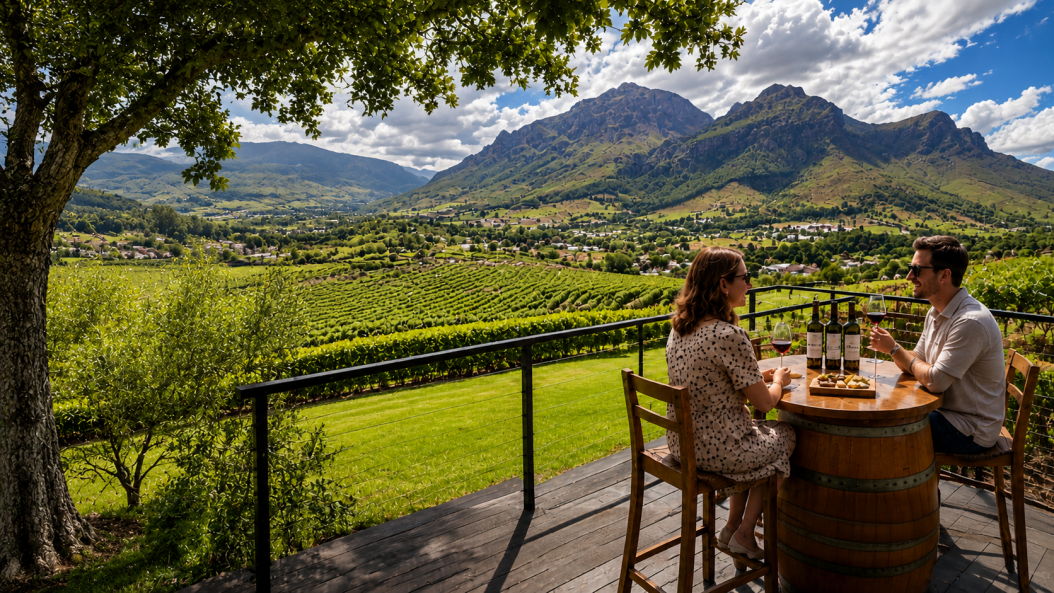
Constantia is Cape Town's oldest wine-producing valley, set in a leafy, suburban bowl on the lower slopes of Table Mountain. It is quiet, green and residential, home to several historic wine estates. Constantia offers a serene, garden-setting stay with wine tasting and fine dining — all within a relatively short drive of the city centre. Wine tours can collect from Constantia easily. A car or pre-arranged transport is essential — you cannot walk between estates or to restaurants.
Best suited guests
Visitors seeking quiet, green luxury with wine and fine dining, who have transport arranged.
Hout Bay
Hout Bay is a coastal village set in a valley about twenty minutes' drive from the city centre along the Atlantic Seaboard. It has a working harbour, a long beach and a more relaxed, village pace. Hout Bay is a practical base for visitors whose itinerary focuses on Chapman's Peak Drive, Cape Point or the Atlantic Seaboard rather than the city centre. A car or pre-arranged transport is essential.
Best suited guests
Visitors who want a relaxed, scenic coastal base and whose itinerary leans toward the peninsula.
Stellenbosch
Stellenbosch is a historic university town in the Cape Winelands, approximately an hour's drive from central Cape Town. It is the heart of South Africa's wine industry, surrounded by hundreds of estates, and offers a walkable town centre with oak-lined streets and Cape Dutch architecture. Staying here means you are not in Cape Town — if your itinerary includes Table Mountain, the V&A Waterfront or Cape Point, you will need to travel to the city for those experiences.
Best suited guests
Wine-focused visitors, or those on a longer trip who can dedicate two to three nights to the Winelands.
Franschhoek
Franschhoek is a small village in a valley about twenty minutes beyond Stellenbosch, known for its concentration of fine-dining restaurants and wine estates. The Franschhoek Wine Tram provides a hop-on, hop-off way to visit estates without driving. It is best treated as a destination stay rather than a base for daily Cape Town touring.
Best suited guests
Couples, food enthusiasts and visitors seeking a romantic, destination-quality Winelands stay.
Best Area for First-Time Visitors
For most first-time international visitors, the V&A Waterfront is the most straightforward choice. It combines walkable access to restaurants and visitor facilities with easy tour collection and airport transfer logistics. Sea Point is the strongest alternative for visitors who prefer a more residential, less commercial atmosphere. For a full first-time itinerary, read our 3-day Cape Town itinerary for first-time visitors.
Best Choices for Couples and Honeymooners
De Waterkant offers boutique intimacy walkable to the Waterfront and city. Camps Bay delivers sunset beaches and a resort atmosphere. Franschhoek provides culinary destination quality in a mountain-valley setting. Constantia offers garden luxury, wine estates and fine dining. Couples whose priority is romance and food often split a stay between Camps Bay or De Waterkant and Franschhoek.
Best Areas for Families
Families usually need space, walkable amenities, safe swimming options and proximity to child-friendly activities. Sea Point offers a promenade for walking and cycling, apartment hotels with kitchen facilities and swimming pools. The V&A Waterfront has the Two Oceans Aquarium, boat trips and restaurants with children's menus. Green Point has open park space and a playground. Camps Bay has a sandy beach and shallow rock pools, though the water is cold and supervision is essential.
Mature Travellers and Mobility Considerations
For mature travellers or those with mobility considerations, the key factors are flat terrain, minimal steps and short walking distances. Sea Point is often the strongest choice — the promenade is flat and paved, and restaurants are along a single main road. The V&A Waterfront is also well-suited, as the precinct is flat and designed for high pedestrian volume. Camps Bay involves more inclines, and the City Bowl includes hills and uneven historic paving. If you have mobility requirements, share them with Donovan when planning your itinerary so that routes and pacing can be tailored.
Best Areas Without a Rental Car
If you do not plan to rent a car, prioritise walkable areas: V&A Waterfront, City Bowl, Sea Point, De Waterkant and Green Point. These offer walkable restaurants, tour collection points and public bus access. Areas like Constantia, Hout Bay, Stellenbosch and Franschhoek require a car or pre-arranged transport. For airport arrival, a private airport transfer removes the need to navigate car rental after a long flight.
Cape Town vs Stellenbosch or Franschhoek
Stellenbosch and Franschhoek are Winelands towns, not Cape Town neighbourhoods — staying there means you are in a different town, approximately an hour or more from central Cape Town. Stay in Cape Town if your priorities are Table Mountain, the V&A Waterfront, Cape Point or Robben Island. Stay in Stellenbosch or Franschhoek if your priorities are wine tasting, fine dining and vineyard landscapes.
Should You Split Your Stay?
For trips of five nights or more, splitting your stay — typically three nights in Cape Town and two in Stellenbosch or Franschhoek — lets you experience both without excessive daily driving. For shorter trips, a single base in Cape Town with a day wine tour is usually more practical. If you are unsure, ask Donovan — he can help you decide based on your dates and pace.
Airport Transfer Implications
Your accommodation location directly affects your airport transfer experience. Cape Town International Airport is on the eastern side of the city. Areas further from the centre — Hout Bay, Constantia, Stellenbosch and Franschhoek — involve longer transfer times and higher costs. Booking a private airport transfer in advance means your driver monitors your flight and meets you in the arrivals hall.
How Hotel Location Affects Tour Collection
Your accommodation location shapes your daily experience more than most visitors expect. Private tours typically collect guests from their hotel — but the time spent collecting and dropping off affects how much of your day is spent travelling. If you stay in the Waterfront, Sea Point, Green Point or the City Bowl, tour collection is efficient. If you stay in Camps Bay or Hout Bay, tours heading east require you to travel back through the Atlantic Seaboard first. If you stay in Stellenbosch or Franschhoek, Cape Town-based tours involve a significant drive before the tour begins.
Why Close on the Map Does Not Mean Quick
Cape Town's geography — a mountain between the city and the Atlantic coast, a working harbour, narrow coastal roads — means that distances on a map do not translate directly to travel times. Table Mountain sits between the City Bowl and the Atlantic Seaboard; you cannot drive through it. Peak traffic on the Atlantic Seaboard main road and the N1/N2 can add significant time to journeys, particularly in the morning and late afternoon. When choosing where to stay, consider the routes to your planned activities during the times you will actually be travelling.
Safety: An Honest Perspective
No neighbourhood can guarantee safety. Accommodation quality, exact street, access control, transport arrangements, time of day and personal behaviour all matter. The V&A Waterfront has an active security presence within a managed precinct, but that does not extend to every surrounding street. Sea Point and Green Point are residential areas where the exact street and time of day matter. The City Bowl includes streets that are busy and well-lit and others that are quieter and less advisable at night. Camps Bay is a small village centre that is lively in season. None of these areas should be considered completely safe, and standard travel precautions apply everywhere. Travellers should check recent accommodation reviews and obtain current local advice before booking. For detailed safety guidance, read our Cape Town safety guide.
Accommodation Booking Checklist
Before confirming accommodation, consider asking the property or your booking platform:
- Exact street address — not just the area name, as streets within the same neighbourhood vary significantly.
- Access control — is there secure parking, a reception desk, or controlled entry?
- Walkability — what is within a 10-minute walk? Restaurants, shops, a promenade?
- Night-time surroundings — is the street busy, quiet, well-lit? What is it like after dark?
- Transfer and tour collection — can private tours and transfers collect from the property?
- Recent reviews — what do guests from the last few months say about the area and the property?
- Transport options — is there a bus stop nearby? How far is the nearest main road?
Plan Your Cape Town Stay with Donovan
Choosing where to stay in Cape Town is not just about finding a nice hotel — it is about matching your base to your itinerary, your transport arrangements and your personal comfort. Your hotel location affects airport collection, tour routes, restaurant access and how much time you spend travelling each day. If you tell Donovan your dates, interests, preferred atmosphere and planned activities, he can help you understand which location will make your itinerary easier before you confirm accommodation. You can reach him through the contact page or by checking your dates. Donovan will review your information personally and respond with tailored guidance — no instant booking, just considered planning from a registered Cape Town tourist guide who knows these streets, routes and neighbourhoods first-hand.
Sources
Recommended Reading



Plan With the Full Journey in Mind
Choose Your Accommodation with the Full Journey in Mind
Your hotel location affects airport collection, tour routes, restaurant access and how much time you spend travelling each day.
About the author

Reviewed by Nuno Da Costa
Language Guide
Nuno brings specialist Spanish, Portuguese and English language expertise to selected journeys, helping guests communicate with ease, connect more deeply with local people, and fully immerse themselves in the culture and experiences of each destination.
Learn more about Donovan →