
Cape Town Travel Planning
The Perfect 3-Day Cape Town ItineraryFor First-Time Visitors Who Do Not Want to Feel Rushed
Plan a relaxed 3-day Cape Town itinerary with Table Mountain, Cape Point, penguins and the Winelands — without rushing or self-driving.
Cape Town does not suffer from a shortage of extraordinary places.
It suffers from visitors trying to experience too many of them too quickly.
You arrive with a list containing Table Mountain, Bo-Kaap, Camps Bay, Cape Point, penguins, Stellenbosch, Franschhoek, Constantia, Kirstenbosch, Robben Island and the V&A Waterfront. Then reality arrives.
Cape Town is geographically spread out. The weather can change. Table Mountain may close because of wind. Cape Point requires a proper day. Wine-country lunches take longer than expected — and that is often exactly what makes them memorable.
A successful 3-day Cape Town itinerary should therefore not feel like a race between landmarks. It should give you the icons you travelled across the world to see while leaving enough time for the landscapes, conversations, food, wine and spontaneous moments that make the Cape unforgettable.
This guide is designed for first-time international visitors, couples and small private groups who want to experience Cape Town comfortably, intelligently and without spending the entire trip watching the clock.
The Best 3-Day Cape Town Itinerary at a Glance
| Day | Main experience |
|---|---|
| Day 1 | Cape Town, Table Mountain and Atlantic Seaboard |
| Day 2 | Cape Point and Boulders penguins |
| Day 3 | Stellenbosch and Franschhoek |
This itinerary works because each day has a clear geographical focus. You avoid repeatedly driving across the city, reduce unnecessary backtracking and keep enough flexibility to respond to Cape Town's changing weather.
The most important rule
Do not build the entire itinerary around a fixed Table Mountain time without checking conditions. The Cableway is weather dependent. Treat Table Mountain as a priority on the first suitable morning — not as an appointment the mountain is required to honour.
Day 1: Cape Town, Table Mountain and the Atlantic Seaboard
Your first day should help you understand Cape Town before you travel beyond it. The goal is not to collect as many landmarks as possible. It is to understand how the mountain, harbour, City Bowl, Atlantic Ocean and surrounding communities fit together.
Start with Table Mountain when the weather allows
When the Cableway is operating and visibility is good, begin with Table Mountain. The journey to the summit gives first-time visitors an immediate understanding of Cape Town's geography.
- ●Enjoy the rotating Cableway journey
- ●Walk along the accessible summit paths
- ●Photograph the city and coastline
- ●Identify major landmarks
- ●Pause instead of immediately joining the return queue
- ●Take in the scale of the Cape Peninsula
Do not treat Table Mountain as a ten-minute photograph. It is the landmark around which much of Cape Town's identity and geography are organised.
Check Cableway Operations Before You Lock the Day In
Table Mountain Aerial Cableway operations can change because of wind, cloud, visibility, capacity, maintenance or other operational decisions. Check the current operating status and any announced maintenance dates for your travel period before treating a summit visit as fixed.
If the Cableway cannot operate, keep the day useful with Bo-Kaap, the City Bowl, Signal Hill, Kirstenbosch, Constantia or the Atlantic Seaboard rather than abandoning the wider Cape Town plan.
Continue into Cape Town's historic City Bowl
After Table Mountain, move into the centre of Cape Town. A balanced orientation could include selected stops at Bo-Kaap, Company's Garden, City Hall, Greenmarket Square, District Six and the Castle of Good Hope. Choose fewer stops and understand them properly.
Experience Bo-Kaap respectfully
Bo-Kaap is one of Cape Town's most photographed areas, but it is not an outdoor photography studio. It is a living residential community with a significant Cape Muslim history.
- ●Recognise Cape Muslim culture and history
- ●Acknowledge the area's connection to slavery and colonialism
- ●Take photographs respectfully — avoid blocking homes
- ●Remember that visitors are guests in somebody else's neighbourhood
Follow the Atlantic Seaboard
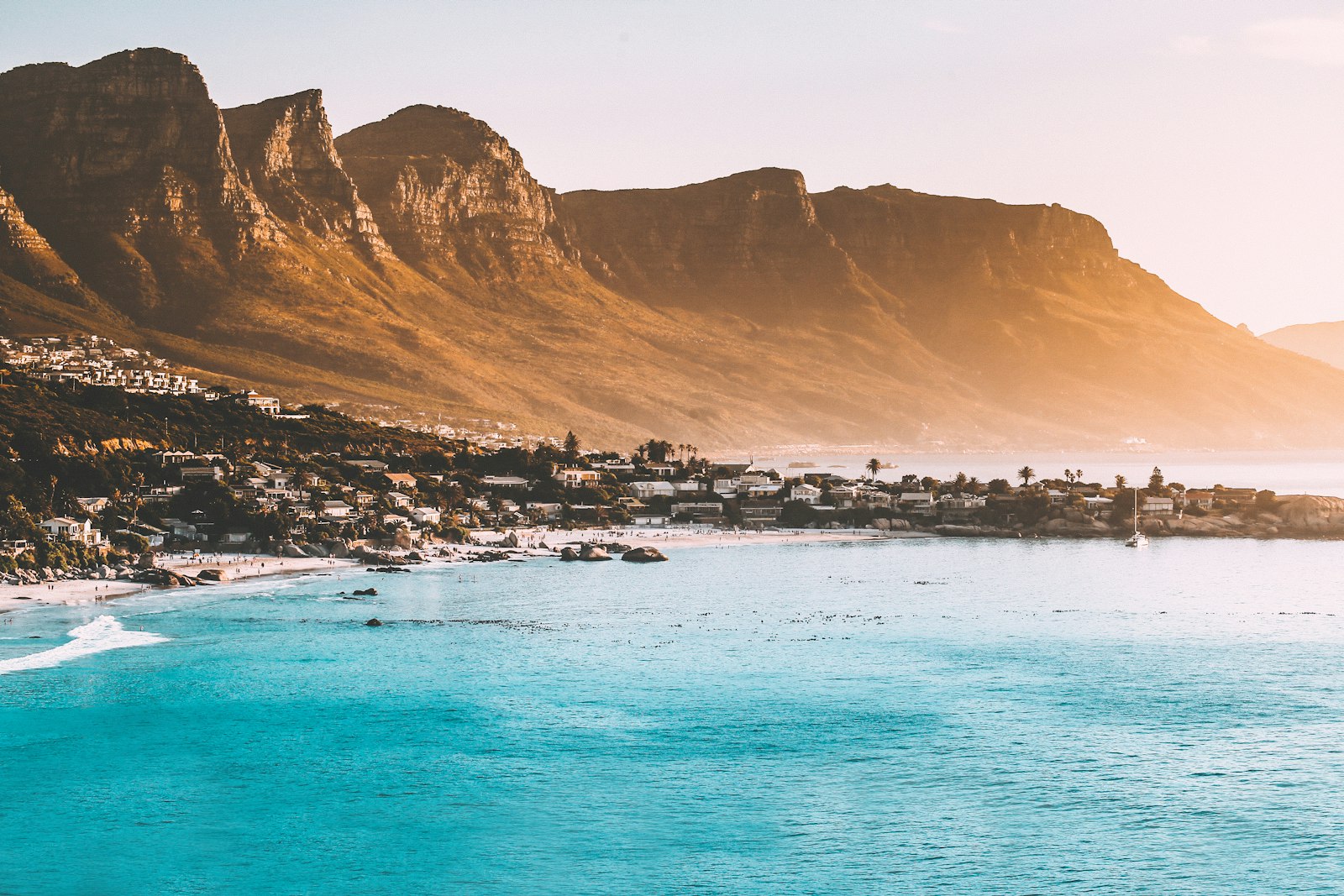
After the City Bowl, continue toward Cape Town's Atlantic coastline through Green Point, Sea Point, Clifton and Camps Bay. This part of the day provides a dramatic contrast to the city centre — you move from historic streets to beaches, mountain slopes and ocean views within a relatively short distance.
End Day 1 without destroying Day 2. A strong first day should leave you excited for the rest of the trip — not exhausted before it has properly begun.
What Happens if Table Mountain Is Closed?
Cloud, wind, maintenance or operational issues may close the Cableway. That does not mean the day is ruined.
Use a weather-adjusted Day 1
- ●Bo-Kaap and the City Bowl
- ●Company's Garden
- ●Atlantic Seaboard
- ●Kirstenbosch or Constantia
- ●Signal Hill
Move Table Mountain to Day 2 or 3
If Table Mountain is essential, it may be possible to move it to the morning of Day 2 or Day 3 depending on operating status, visibility, hotel location and existing bookings. A private itinerary can respond to actual conditions.
Day 2: Cape Point, Chapman's Peak and the African Penguins
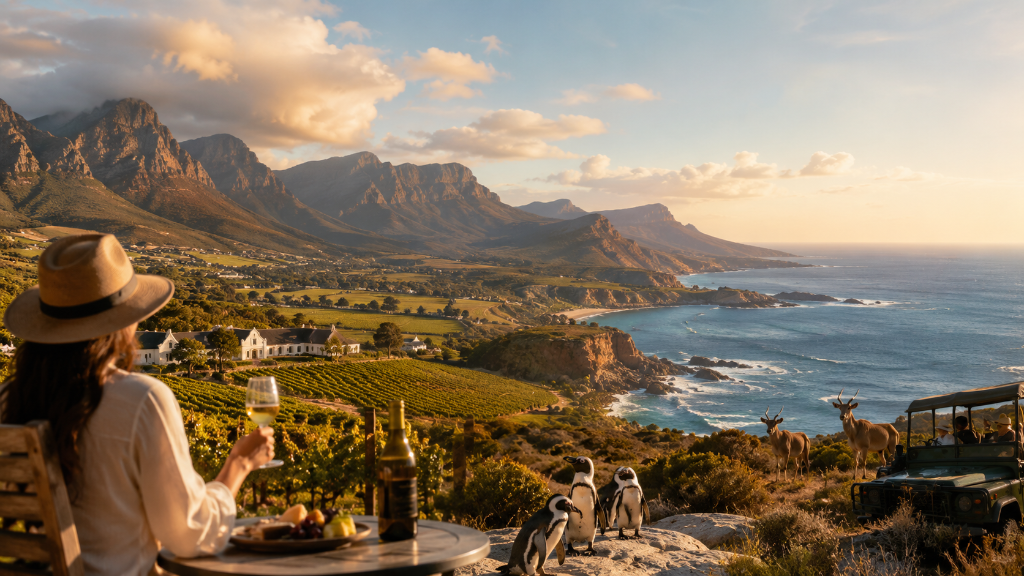
Day 2 is the most visually dramatic driving day of the itinerary. It combines ocean views, mountain passes, protected landscapes, wildlife and coastal communities. Treat it as a full-day journey.
Leave early enough to enjoy the Peninsula
A private Cape Peninsula route may include Camps Bay, Hout Bay, Chapman's Peak Drive, Noordhoek, Cape Point, Cape of Good Hope, Boulders Penguin Colony, Simon's Town, Kalk Bay and Muizenberg. The exact route should depend on starting location, weather, traffic, road conditions and guest interests.
Experience Chapman's Peak as more than a road
Chapman's Peak Drive follows dramatic mountain slopes above the Atlantic Ocean and includes several viewpoints. Access can occasionally be affected by weather, rockfall risk, maintenance or road conditions. A capable itinerary should always have an alternative route.
Explore Cape Point and the Cape of Good Hope
Cape Point forms part of Table Mountain National Park and offers one of South Africa's most dramatic coastal landscapes. Allow time to understand the scale of the area — rugged cliffs, ocean views, walking routes, wildlife and protected fynbos. Do not reduce the experience to a photograph beside a sign.
Do the Atlantic and Indian Oceans meet at Cape Point?
Cape Point is often described in marketing as the exact meeting point of the two oceans. The geographic reality is more complex — the officially recognised meeting point is Cape Agulhas. Cape Point does not need an exaggerated claim to be spectacular. Its cliffs, wind, ocean and wildlife are powerful enough.
Visit the endangered African penguins at Boulders
Boulders Penguin Colony near Simon's Town protects a well-known land-based colony of endangered African penguins. Designated boardwalks allow visitors to observe the birds while protecting their habitat.
- ●Remain on the boardwalks
- ●Avoid touching or feeding penguins
- ●Keep an appropriate distance
- ●Follow ranger instructions
- ●Treat the site as protected habitat
The penguins may appear calm and approachable, but they are wild animals — not props for photographs.
Allow time for Simon's Town or Kalk Bay
Choose one meaningful coastal stop on the return journey. Simon's Town offers naval history, historic architecture and harbour atmosphere. Kalk Bay offers a working harbour, independent shops and seafood. Trying to explore every coastal village turns the return into another race.
Do not combine Cape Point and the full Winelands in one day.
Cape Point deserves time for coastal stops, viewpoints, wildlife and walking. The Winelands deserve time for tastings, estate visits, conversation and lunch. Trying to combine both usually sacrifices the quality of each experience.
Day 3: Stellenbosch and Franschhoek Without the Wine Snobbery
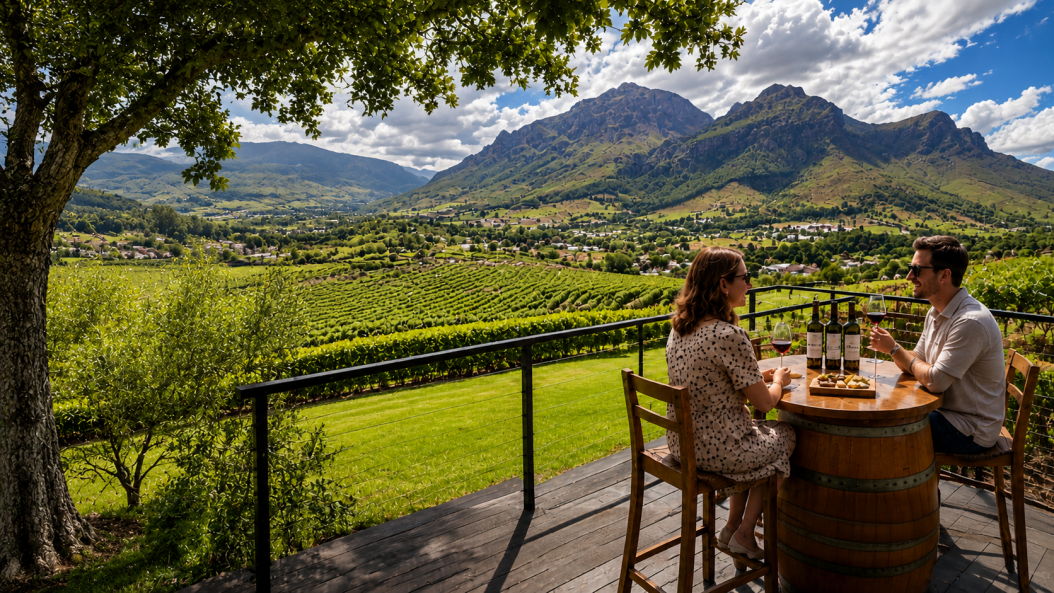
The third day should feel different. After the energy of the city and the scale of the Peninsula, the Cape Winelands offer a slower experience shaped around vineyards, food, conversation and mountain scenery. You do not need to be a wine expert. You only need to know what you enjoy — or be willing to discover it.
Begin in Stellenbosch
Stellenbosch combines historic architecture, mountain scenery, established wine estates, boutique producers, restaurants and a wide range of South African wines. A first-time visit could include a brief orientation through the historic town before continuing into the surrounding wine country. Do not confuse "seeing Stellenbosch" with visiting one estate that happens to have a Stellenbosch address.
Continue toward Franschhoek
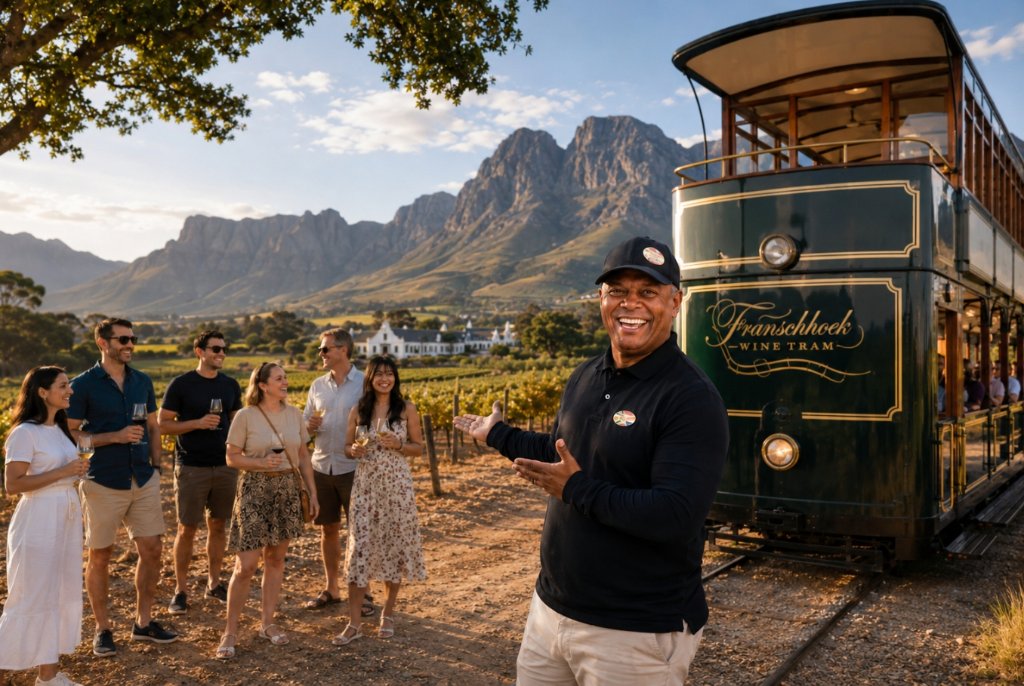
Franschhoek is particularly attractive to travellers who appreciate scenic mountain settings, destination restaurants, elegant estates, long lunches and a relaxed village atmosphere. Stellenbosch and Franschhoek work well together when the route is carefully planned. They work badly when visitors attempt to visit every famous estate they discovered online.
Visit fewer estates and enjoy them properly
For most first-time visitors, three thoughtfully selected wine experiences are better than five rushed tastings. A relaxed day could include hotel collection, a Stellenbosch orientation, two or three estate visits, a leisurely lunch and a comfortable return to Cape Town — with room for the moments that no timetable can guarantee.
How should wine estates be selected?
A private wine itinerary should be shaped around the guest — not around whichever route is easiest for the operator. Useful questions include:
- ●Do you prefer red, white, sparkling or mixed wine?
- ●Are you beginners or experienced wine travellers?
- ●Would you enjoy a food pairing?
- ●Are you interested in Pinotage?
- ●Do you prefer historic estates or smaller producers?
- ●Is scenery especially important?
- ●Would you like a long lunch?
- ●Is anyone in the group not drinking?
- ●Are you celebrating something?
The best wine tour is not necessarily the one with the most expensive estates. It is the one that fits your interests, pace and personality.
Explore specific wine experiences:
Three Ways to Customise This 3-Day Cape Town Itinerary
Not every traveller wants the same pace.
The Relaxed 3-Day Itinerary
Day 1
- ●Table Mountain when conditions allow
- ●Bo-Kaap
- ●Short city orientation
- ●Atlantic Seaboard
- ●Early return
Day 2
- ●Chapman's Peak
- ●Cape Point
- ●Boulders penguins
- ●One coastal village
- ●Scenic return
Day 3
- ●Two selected wine estates
- ●Long lunch
- ●Stellenbosch or Franschhoek
- ●Early return
Best for: Mature travellers, honeymooners, anniversary couples, guests who prefer depth over quantity.
The Classic First-Time Itinerary
Day 1
- ●Table Mountain
- ●City Bowl
- ●Bo-Kaap
- ●Atlantic Seaboard
- ●Waterfront or Camps Bay
Day 2
- ●Full Cape Peninsula
- ●Cape Point
- ●Cape of Good Hope
- ●Boulders
- ●One coastal village
Day 3
- ●Stellenbosch
- ●Three tastings
- ●Franschhoek
- ●Lunch
- ●Scenic return
Best for: First-time international couples, small private groups, visitors seeking major highlights.
The Wine-and-Food Itinerary
Day 1
- ●Table Mountain
- ●City orientation
- ●Constantia tasting or lunch
- ●Atlantic Seaboard
Day 2
- ●Cape Point
- ●Boulders
- ●Coastal lunch
- ●Scenic return
Day 3
- ●Stellenbosch and Franschhoek
- ●Curated tastings
- ●Food pairing
- ●Destination lunch
- ●Boutique producer
Best for: Wine-curious travellers, food-focused couples, celebration trips, honeymoons.
Can You Follow This Cape Town Itinerary Without Renting a Car?
Yes. Visitors can combine ride-hailing services, scheduled tours, tourist buses, the Franschhoek Wine Tram and private tours. The challenge is not simply reaching each attraction — it is coordinating collection times, weather changes, attraction closures, multiple booking platforms, rural wine estates and wine tasting without self-driving.
A private guide allows the three days to function as one connected journey rather than a collection of separate bookings.
Where Should First-Time Visitors Stay in Cape Town?
The most convenient areas for a three-day itinerary often include the City Bowl, Gardens, De Waterkant, V&A Waterfront, Green Point, Sea Point and Camps Bay. The best location depends on what matters most to you.
City Bowl
Restaurants, urban atmosphere, historic areas, central positioning
V&A Waterfront
Convenience, shopping, harbour atmosphere, established visitor facilities
Green Point or Sea Point
Promenade access, restaurants, Atlantic Seaboard positioning
Camps Bay
Beach views, mountain scenery, sunset atmosphere, resort-style surroundings
Your tour collection plan should always be based on the actual accommodation — not a generic assumption that every guest begins in central Cape Town.
What Should You Book in Advance?
Book as early as practical
- ●Accommodation
- ●Flights
- ●Private tour dates
- ●Robben Island tickets
- ●Popular restaurants
- ●Specialist wine experiences
- ●Marine activities
- ●Multi-day packages
Check closer to the day
- ●Table Mountain operating status
- ●Weather and wind
- ●Scenic road conditions
- ●Outdoor attraction information
Confirm with your guide
- ●Collection location
- ●Group size
- ●Mobility needs
- ●Dietary requirements
- ●Child seats
- ●Wine preferences
- ●Special occasions
- ●Attractions already booked
What Should You Pack for Three Days in Cape Town?
Cape Town's weather can change during the same day.
- ●Comfortable walking shoes
- ●Light layers
- ●Windproof jacket
- ●Sun protection
- ●Sunglasses
- ●Refillable water bottle
- ●Charged phone
- ●Power bank
- ●Necessary medication
- ●Small day bag
Comfortable footwear matters more than creating a perfect photograph.
Itinerary Planning
Want This Itinerary Adapted Around Your Dates?
Tell Donovan your travel dates, group size and interests for a personally reviewed three-day plan.
Frequently Asked Questions
Recommended Reading


Three Days, One Journey
Turn Three Days into One Seamless Cape Journey
Share your dates and preferences for a personalised quotation from a local guide.
About the author
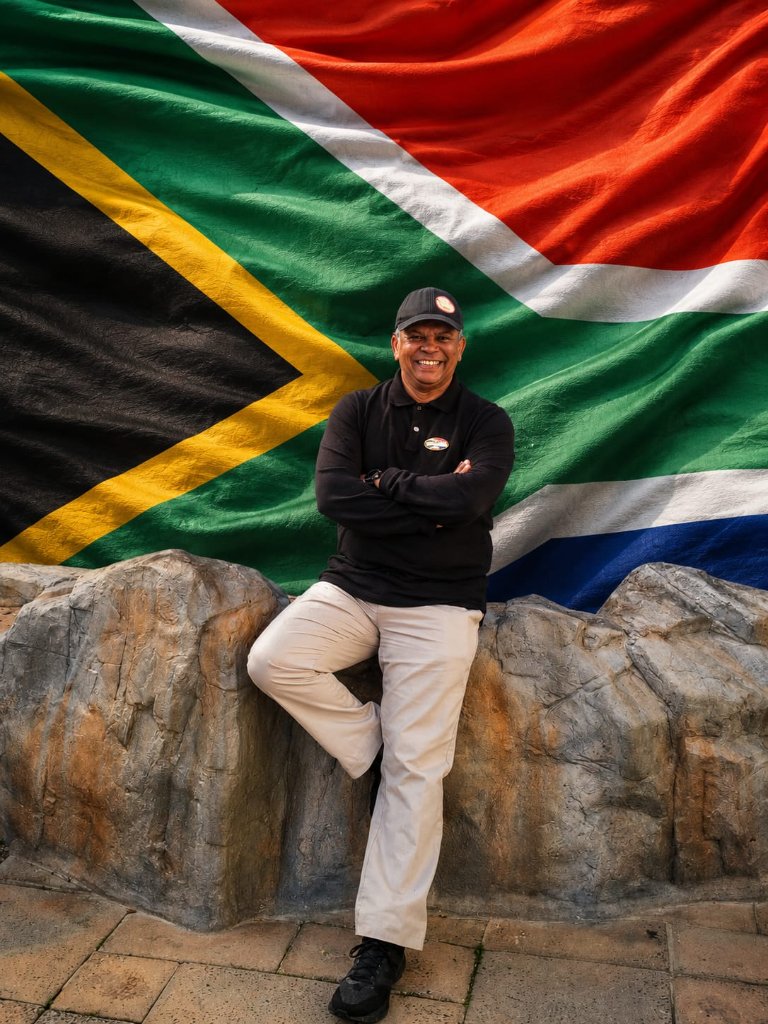
Reviewed by Nuno Da Costa
Language Guide
Nuno brings specialist Spanish, Portuguese and English language expertise to selected journeys, helping guests communicate with ease, connect more deeply with local people, and fully immerse themselves in the culture and experiences of each destination.
Learn more about Donovan →Sources
All opening times, entrance fees, road conditions, maintenance dates and attraction availability should be verified immediately before travel.